
Ireland is rapidly emerging as a significant player in the global quantum technology landscape. From quantum photonics and advanced materials research to next-generation computing and sensing, Irish universities, institutes, and industrial collaborations are investing heavily in quantum-enabled innovation. As these programmes mature, the demand for sophisticated cryogenic, optical, and precision measurement infrastructure is increasing in parallel.
Recent years have seen the launch of major Irish quantum initiatives such as QUBIC (Quantum Computing for Industry), a €13.7 million programme designed to accelerate industrial quantum computing applications across pharmaceuticals, advanced materials, and energy sectors. The project brings together academic groups, SMEs, and industry partners to position Ireland as a hub for practical quantum computing deployment. Through its Quantum 2030 National Strategy, the government aims to establish the country as an internationally competitive leader in scientific and commercial quantum advancements
At the same time, institutions including Trinity College Dublin, University College Dublin, University College Cork, and Tyndall National Institute are advancing research into quantum photonics, quantum materials, superconducting systems, and quantum sensing.
Many of these research areas rely on one critical factor: environmental control at extremely low temperatures combined with highly stable optical and electrical measurements. This is where advanced instrumentation platforms become indispensable.
One example is the OptiCool Optical Cryostat. Designed as a cryogen-free optical cryostat platform, the OptiCool enables researchers to study quantum materials, spin systems, photonic devices, and semiconductor structures under tightly controlled temperature and magnetic field conditions.
For Irish groups working on quantum emitters, single-photon sources, and nanophotonic systems, these capabilities are particularly relevant. Researchers at Tyndall National Institute and Trinity College Dublin are actively investigating quantum dots, integrated photonic devices, and semiconductor quantum emitters for applications in quantum communications and photonic quantum computing. Such experiments often require low-vibration cryogenic environments to preserve coherence and minimise thermal noise — requirements ideally suited to platforms such as the OptiCool or the Montana Instruments Cryostation.

Montana Instruments systems are widely recognised for delivering ultra-stable cryogenic environments with excellent optical access, making them highly effective for quantum photonics and qubit characterisation research. In practical terms, this enables scientists to perform spectroscopy, fluorescence, and coherence measurements on delicate quantum systems with greater stability and repeatability.
Quantum sensing and quantum materials research also continue to grow across Ireland and the UK. The exploration of 2D materials, topological systems, superconductors, and spintronic devices depends on accurate low-noise electrical measurements under cryogenic conditions. Here, the Lake Shore M81-SSM provides a powerful solution.
The M81 synchronous source measure system combines DC and AC sourcing with lock-in style sensitivity and highly synchronised measurements, allowing researchers to characterise quantum devices with exceptional precision. This is particularly valuable for experiments involving quantum transport measurements, Josephson junctions, nanowire devices, and superconducting qubits where signal integrity and phase-sensitive detection are critical.

Cryogenic Environments: the M81-SSM integrates seamlessly with industry-standard cryogenic test platforms like the Quantum Design PPMS DynaCool (Physical Property Measurement System) and Quantum Design Oxford TeslatronPT to manage sample temperature and magnetic fields during electrical transport measurements.
Another enabling technology relevant to quantum materials and semiconductor research is the FusionScope Correlative AFM-SEM Platform. By combining atomic force microscopy and electron microscopy in a single integrated workflow, researchers can correlate nanoscale morphology, electrical properties, and structural information with unprecedented efficiency. For quantum materials scientists investigating defects, interfaces, or nanoscale device fabrication, this multimodal approach can significantly accelerate development cycles.

Ireland’s growing emphasis on semiconductor innovation further strengthens the importance of such instrumentation. Quantum computing hardware increasingly overlaps with advanced semiconductor fabrication, photonics integration, and nanoscale device engineering. As integrated photonic quantum technologies evolve globally, scalable fabrication and characterisation tools are becoming essential research infrastructure.
The broader international quantum ecosystem also points toward increasing demand for cryogenic and measurement solutions. Recent developments in silicon-based quantum computing and photonic quantum systems demonstrate how quickly the field is moving from theoretical research toward deployable hardware. Ireland’s participation in this transition positions universities and industrial labs to benefit significantly from robust experimental platforms capable of supporting both fundamental research and technology translation.
As quantum technologies continue to evolve, the challenge is no longer simply proving quantum phenomena in the laboratory. Increasingly, researchers are focused on scalability, reproducibility, integration, and real-world deployment. Achieving these goals depends heavily on reliable experimental infrastructure.
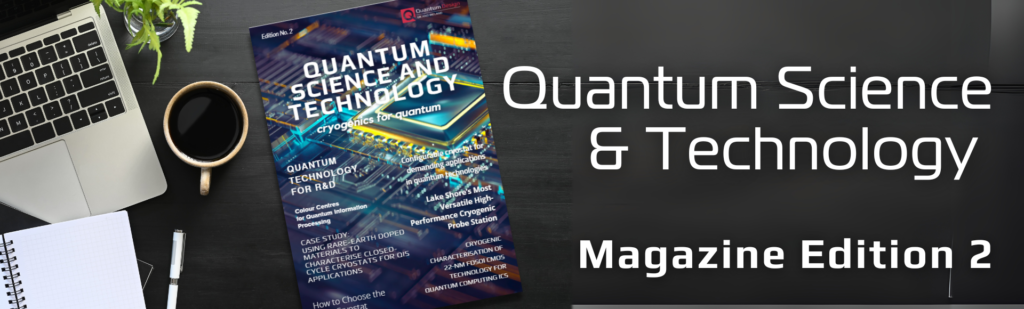
With a portfolio spanning cryogenics, quantum measurement systems, microscopy, and nanotechnology instrumentation, QDUKI’s Quantum Science & Technology solutions are well positioned to support Ireland’s expanding quantum research community. From quantum photonics and superconducting materials to advanced semiconductor devices and next-generation sensing technologies, these tools are helping bridge the gap between quantum theory and practical application.

Supporting this work requires highly specialised instrumentation for low-temperature, optical, and quantum measurements. Even if you’re not sure exactly what you need, our team are on hand to discuss your application or research and see if we can find the best solution for you. Get in touch by email or call (01372) 378822.